Living, Working, and Wasting Time in Southern Manitoba

Author: Sean (Page 5 of 7)

An enhanced misstep

I’m in the process of getting my passport. I don’t currently have travel plans, but the fact that I can’t even go to Bottineau right now without the right documents is annoying. I could have obtained a Manitoba Enhanced Driver’s License (EDL) for less money, but it’s inability to be used as a travel document for anything but land and water crossings, and the fact I lose it if I move out of province, makes it less than ideal.

2010-Enhanced-Drivers-Licence-female-front_HRAccording to the Winnipeg Sun, as of August 31, 2012 the Manitoba EDL program had issued 18,821 pieces of I.D. since the program started in 2009/2010. Apparently the program cost about $14-million.

Manitobans are not exactly running to sign up for this thing. As a comparison, in 2011 57.47% of Manitobans had passports according to Passport Canada. Assuming that the population of Manitoba is the 1,208,268 as stated in Wikipedia, then that would mean that 694,392 Manitobans currently have passports. That means that the rate of passports use in Manitoba is over 36 times as high as EDL use.

An EDL costs $30 over and above your driver’s licence, $50 for the non-driver version, and you renew normally every 5 years. A Canadian passport on the other hand is $120 for 5 years or $160 for 10 years. So in 10 years you would spend $60 on an EDL and $160 on a passport. The passport obviously costs more, but it is a document that allows you to do more in the long run. I’m not sure why we spent $14-million to save 18,821 people a hundred bucks each, we should have just cut them a cheque if we were being realistic.

This brings me to another point. If the Government of Manitoba wanted to make travel documents cheaper for Manitobans, they should have just looked at subsidizing passports. Now that we have the option for a 10-year passport, the province could subsidize the 10-year option by $30 bringing it down to $130, which is only $10 more that the five year. Convince the federal government to toss in a another $10 and 10-year passports for Manitobans would be the document of choice.

Assuming that 10% of passport holders would apply of renew each year, that works out to about 69,440 Manitobans per year getting a Canadian Passport. At a subsidy of $30 per person, the cost of the program would have been just over $2-million per year. That’s seven years of a program for the same cost that would have benefitted 36 times more citizens of the province.

The EDL program just wasn’t thought out.


As an aside, another thing I find annoying is how you go about the process of getting a photo for your passport. It seems ludicrous to me that I have to go get a private photo, have it certified by a guarantor, and then send it in. In 2014 when every province has photo driver’s licences, why do you not have them pull your latest provincial photo onto your passport. This seems like a simple cost-saving, cost-sharing solution between the levels of government.

Welcome to the Human Era

The interesting thing about adopting a humanist outlook on life is the way you start to look at things differently. Things that you just used to accept as that’s just the way it is suddenly seem to not make much sense anymore.

One of those things that has “bothered” me for the last few years has been the basis of our calendar. The Gregorian Calendar is the most widely used calendar in the world. It is based on the believed date of the nativity from the New Testament of the Christian Bible.

For years I have thought that our calendar is kind of annoying. Once you get down to year 1, you jump to year –1 and start counting in reverse. I’ve never liked how we start counting backward, dates just don’t seem right getting “bigger” as you go back in time. It’s one of those things that doesn’t keep you up at night, but you know that it is just a ridiculous system, at least when documenting human history.

I’ve thought for a while that we should pick a date sufficiently far back in the past so that it encompasses all of written human history and move forward from that as a year zero. To me it has always made sense to make it an even multiple of 10,000 so as to be able to keep our current numbering system during a transition period. As it turns out, 10,000 years is just about right, you don’t have to go back further.Cesare Emiliani in the 1950s

So with this in mind, I did a search on the internet last night, figuring that if I had had the idea, chances are someone before had too. The gentleman to the right is Cesare Emiliani, an Italian-American geologist and palaeontologist, who later in life in 1993 proposed just such a system.

He saw four problems with the current calendar: (from Wikipedia)

  1. The Anno Domini era is based on an erroneous estimation of the birth year of Jesus Christ. The era places Jesus’ birth year in 1 BC, but modern scholars have determined that he was born in or before 4 BC. Emiliani argues that replacing it with the approximate beginning of the Holocene era makes sense.
  2. Emiliani opined that the birth of Jesus Christ is a less universally relevant epoch event than the approximate beginning of the Holocene era.
  3. The years BC are counted down when moving from past to future, making calculation of timespans difficult.
  4. The Anno Domini era has no year zero, with 1 BC followed immediately by AD 1, complicating the calculation of timespans further.

His solution was the proposal of the Holocene Calendar, or Human Era (HE) calendar which starts at roughly the beginning of the Holocene Epoch. Holocene is Greek meaning entirely recent. It turns out that 10,000 years is right about the time that the Holocene started.

To me the adoption of such a calendar makes sense. It requires very little adjustment to current systems other than sticking a one in front of the current date. I’ve heard people claim that it would cause a future computer problem, however, I personally would be very surprised if computers 8000 years from now were using current code anyway.

Today for example would be April 5, 12014. We could still consider 2014 to be shorthand, but in scientific and historical studies the HE date would be used. Here are common dates from history.

HistoryHE

In my opinion such a calendar should be considered our standard calendar, moving us away from a calendar based on an event that is not historically significant to a large part of the human population. It puts most significant human events on one timeline, and for those adverse to change, it affects day to day current calendars very little if at all. I know that in school such a calendar would have made much more sense when studying written human history.

Manitoba flag still sucks…

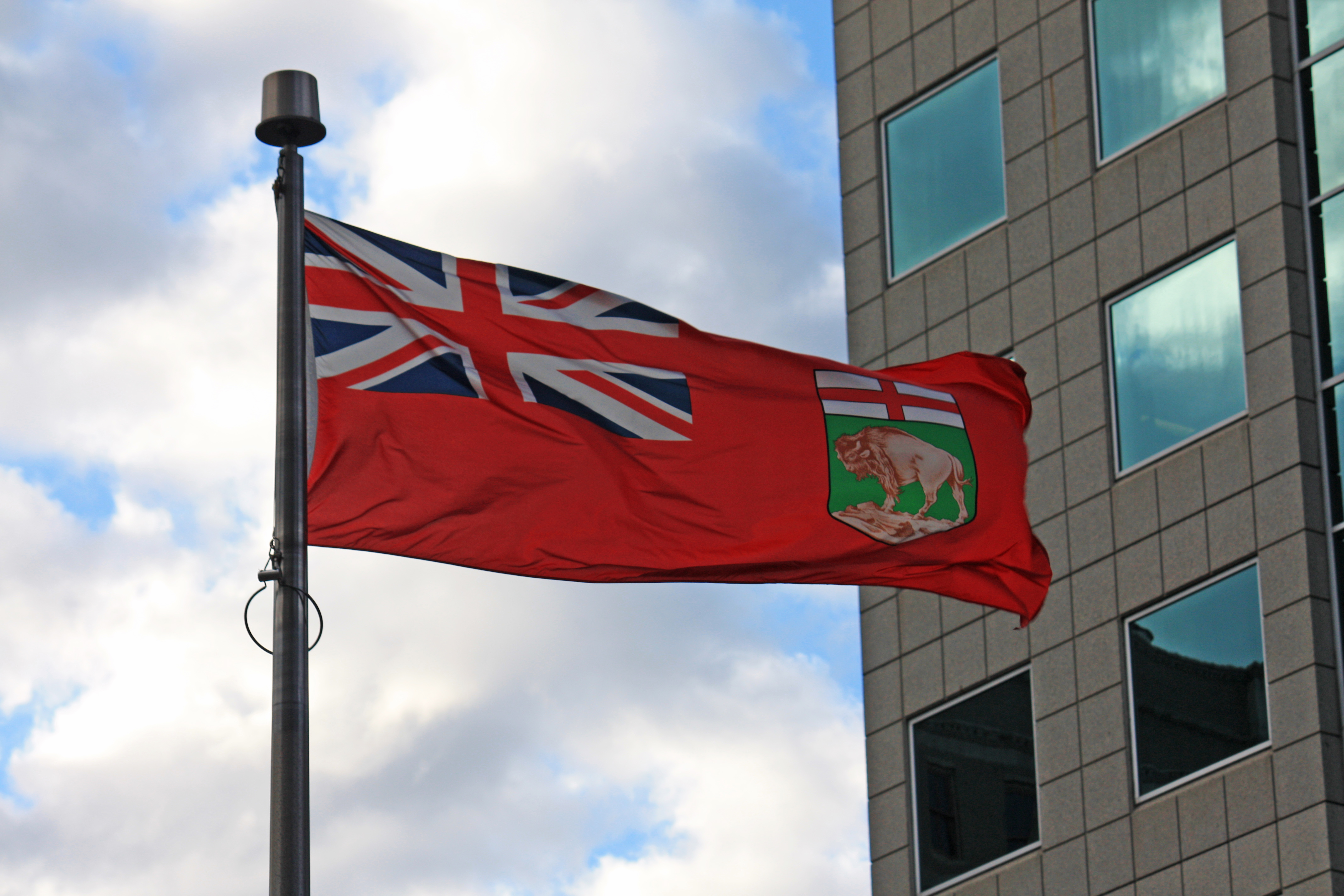
I dislike the Manitoba flag. I have for years. I first noticed how much I disliked it back around 2001. I was sitting in the parking lot at Superstore waiting for my spouse to pick something up when I looked at the flags flying there. We had just moved back from Saskatchewan that March and it struck me how much more the Saskatchewan flag stood out compared to the Manitoba one. Superstore there flew the Canadian and Saskatchewan flags, while here it is Canada and Manitoba.

I love the Canadian flag. Despite its relatively recent adoption in the late 60s, it is a wonderful symbol of our country. At once unique, simple in design, and unmistakeably Canadian. It is a wonderful flag. The Manitoba flag, not so much.

How do I know that it was 2001? Well, in June of that same year, the North American Vexillological Association (NAVA), a group dedicated to the study of flags, released a survey of their members on the flags of North American States and Provinces. We beat many states, but as far as Canadian flags go we were dead last.

Just looking at the thing, I knew it wasn’t a good design. It was kind of just intuitive. After NAVA’s survey I knew why. From their website at Nava.org:

The 5 Basic Principles of Flag Design

  1. Keep It Simple – The flag should be so simple that a child can draw it from memory…
  2. Use Meaningful Symbolism – The flag’s images, colors, or patterns should relate to what it symbolizes…
  3. Use 2–3 Basic Colors – Limit the number of colors on the flag to three, which contrast well and come from the standard color set…
  4. No Lettering or Seals – Never use writing of any kind or an organization’s seal…
  5. Be Distinctive or Be Related – Avoid duplicating other flags, but use similarities to show connections…

Using those basic principles it is easy to see why the Canadian flag is great flag design, and the Manitoba flag is not.

MbOnCRE

First, Manitoba’s flag (top) probably is fairly simple until you get to the coat of arms on the right hand side; then the thing gets overly complicated. It uses way too many colors , and worst of all, it is not distinctive. It is terribly difficult to tell apart from a number of other flags in Canada and the Commonwealth both historically and current.

It also not only duplicates the flags of Ontario (centre), and the Canadian Red Ensign (bottom), but all three actually contain the Union Jack from the United Kingdom in its entirety.

Worst of all, it is not distinctive. Fly any of those three flags to the left, and on a calm day you would not be able to tell them apart. That’s not even taking into account all the uses of the Red Ensign design outside of Canada. Sure, the flag does represent our history by using those symbols, but it ignores all the other peoples who have contributed to this province.

Because of its non-distinctive nature, the flag fails its most important role as a symbol. I look at the flag and it does nothing for me. It does not cause any feelings like those of the Canadian Maple Leaf flag. At least when I look at Saskatchewan’s flag, I see how it says “Saskatchewan.”

myflagSo, in 2001, after the news of NAVA’s flag rankings broke, I wrote to the Winnipeg Free Press and I suggested that they hold a contest for a new Manitoba flag. I included my idea for a Manitoba flag as seen to the right. I knew that the eventual winner would most likely not be adopted, but the Free Press ran with the idea anyway. My design was to keep it simple, at least simple enough to design in MS-Paint! The blue was to represent our northern lakes and expansive skies while the green represented our vast prairie landscape. The bison of course is a well used symbol of our province going back many years. It was also meant to have a similarity to the flag of our western neighbour Saskatchewan who we share much of our identity with.

My entry if I recall correctly made the top 10, which I was pretty happy with.

I do have to admit though, that I instantly fell in love with the winning entry, from Heather Jones of Winnipeg. I would be proud to fly it. It is distinctive, it is meant to represent Sunny Manitoba and the inclusion of the bison uses one of our most recognizable symbols. It has been suggested that the bison be reversed so that it is facing the flagpole as to not be considered rude, but other than that, it is perfect. I’d actually like to buy one to fly it.

Pennies and Nickels, 6¢ too much

It always amazes me how uncommon “common sense” seems to be. Case in point, the elimination of the penny. After years of NDP MP Pat Martin pushing to get the penny eliminated, the Tory government of finance minister Jim Flaherty finally axed the coin early last year after being announced in the previous year’s budget.

Some people do not agree that the penny should have been eliminated, and someone took to stating that displeasure about Jim Flaherty’s involvement in the whole matter after the announcement of his retirement from politics. From Sound Off in the March 26th edition of the Brandon Sun,

“I will always be able to relate that Flaherty was the minister who, along with MP Pat Martin (NDP), took it upon themselves to eliminate part of the Canadian coinage system that was the foundation and building mainstay of money counting and saving. They called the one cent useless and excised its existence. There were other options that needed weeding, but no, the one-cent piece became their victim and was sacrificed on the stained altar of common sense.”

I’m really not sure what the writer was talking about. The one cent piece was useless to buy anything. We have now eliminated it, and as someone who works in a retail store, we don’t miss it one bit. In fact, everybody adjusted to the new reality in less than a week, and other than a few people thinking that pennies were illegal to use, there was no hiccups that I can remember. Pennies will remain legal tender for the foreseeable future, but no one uses them much anymore after only a year. As for being the foundation of our monetary system, I suppose there is an argument for that, but we once had half-cent coins before Confederation, and getting rid of that foundation didn’t hurt us.

I personally think that we didn’t go far enough. We should get rid of the nickel too. The CBC reported last year that according to Jean-Pierre Aubry of the Desjardin Group we should soon be getting rid of the 5 cent piece. He says, and I agree, that the nickel is approaching the point that the penny was at in 1982, the year that he says we should have gotten rid of the penny.

We really need to look at what these coins are costing us and if they have a use anymore. It is not sensible, despite so-called common sense, to keep using a coin that costs us more to make and handle than it is worth.

To me, the dime should really be the lowest denomination in our monetary system. Despite what the Sound Off writer says, it is the dollar that is the basis of our money, and the coinage smaller than it are only there to break it into parts; in 2014, 10 parts is enough.

Without a nickel of course, we can no longer have quarters, so those would go too. My assumption is that we would have a 10¢, 20¢, and 50¢ coin along with the loonie and toonie. At that point we could get rid of the rounding up or down system we have now for cash transactions and go to only the one decimal place for cash and electronic transactions. We did okay rounding away the 3rd decimal place for a century, I’m sure we could do the same thing one decimal place over.

Since our coinage would have to be retooled, we need to look at this now. Getting rid of the penny was simple, but getting rid of the nickel will take more than just stopping circulation. We had the ability to leave the penny until long after it was useful because its removal was so easy. The nickel we’ll actually need a plan. We should probably ramp up 50¢ piece production and put a 20¢ piece into circulation fairly soon, so that we can slowly reduce quarters and nickels until that day when we get rid of them altogether. And if we’re going to introduce new coins, we should do it now while cash registers still have that extra spot left over from the penny. This one shouldn’t wait another 30 years to happen.

An unfair power balance…

Corporations are not people. I don’t care what the Supreme Court of the United States says on the matter. They are not people. It’s a ridiculous notion, and it is creating some pretty ridiculous arguments as a result.

texas

Today in the United States, the Supreme Court heard arguments involving a chain store called Hobby Lobby and its claim that its religious rights were being trampled on by the requirement in The Affordable Care Act, Obamacare, that Hobby Lobby needs to offer health insurance that covers contraception to its employees, if it decides to offer health care at all. It doesn’t have to provide contraception to its employees, just offer a health insurance plan that covers it.

Hobby Lobby claims that that requirement goes against its religious rights because its owners believe that some forms of contraception are actually similar to abortion, which is against their religious beliefs.

So, now everyone seems to think that the decision is whether or not a company can have a religious belief and get an exemption to a law based on that belief. I have seen many people pointing out that such an exemption in this case would lead to exemptions in other cases. Maybe someone doesn’t believe in speed limits; should they get to travel as fast as they want on the roads? People and corporations would start saying that firing LGBTQ employees was okay because their religious beliefs made it so. Those are all very good and valid reasons for the SCOTUS to rule against Hobby Lobby… but it is all missing the point.

The part that never seems to get brought up is the employee’s religious rights. Seriously, if Hobby Lobby can claim its religious freedom is being infringed, what about the employee? This is the damn problem with our society these days. Why is all the focus on the company? The employee is a person and unlike the company, the employee was the one that the Constitution and the Bill of Rights was referring to when it was written over a couple centuries ago.

For me it comes down to this, the law must protect the person who is in the less powerful role. The employer, whether a corporation or an individual, is in a position of power over the employee in many ways; dictating their religious choices should not be one. Hobby Lobby has decided to offer health plans to their employees, something that they do not have to do, but which they do for the tax break it gives them. If it hurts their religious morals so much, then they could forego the tax break, but they want the money more than they want to follow their so-called conscience. When they made that decision, that was the end of their choice. At that point the employee’s religious freedom kicks in, part of which is being able to not be bound to your employer’s religious beliefs.

If you think that you get to impose your religious beliefs on other people, then religious freedom is not exactly the concept that you think it is.

Bus Bench Bullshit

benchonprincess

See that bus bench? I did, last night, on Princess Avenue next to the old fire hall. When I saw it, I just shook my head and rolled my eyes.

Of course if you go to the site, it claims that induced abortions have been shown to increase breast cancer risk. Never mind that their is no causal link found despite the site’s claim otherwise; perhaps that’s why they claim that more research needs to be done. The website is a coalition of various “Right to Life” groups from across Canada.

A quick glance at the research last night and this morning shows that there has been lots of inquiry done into the matter, and that there has been no causal link found between induced abortion and breast cancer.

When it comes to cancer, I think I will believe the American and Canadian Cancer Societies, the American College of Obstetricians and Gynecologists, the National Cancer Institute, the World Health Organization, and the Royal College of Obstetricians and Gynaecologists.

Nothing like threatening women with breast cancer to stop them from doing something you don’t like though. Class act!

So if you pass by this billboard, and check out the site it lists… remember it is FUD. There is no science here.

Is there a plan?

The Daly Overpass isn’t getting overhauled this year, or next year most likely. The province announced on Thursday that the First Street Bridge is in dire shape and work on it will need to be completed before any work on the Daly over on Eighteenth Street gets looked at.

In Saturday’s Brandon Sun (March 15, 2014) the editorial questioning who knew what about the bridge, and when, is a good read. Whether or not there was some political gamesmanship is not the main point of this post, however the question does come to mind.

To me, it appears that the province is buying time on Daly because they are having a hard time getting a plan together. First clue? They still say the bridge needs widening. My feeling is that the people saying that have not actually looked at the bridge. So, let’s take a look.

Daly2

Through the magic of what is Google Street View we can all look at the underside of said bridge. This picture is from Stickney Avenue looking south towards the “duck plant” building at the corner of Pacific and 18th. That my friends is a bridge that has already been widened. See those steel supports all the way along the left side? Those are holding up the sidewalk that is hanging off the eastern side of the bridge separated from the roadway by Jersey Barriers. That sidewalk is beyond the concrete supports that actually hold up the bridge. I’m no structural engineer, but my guess would be that those supports are at or near their design capacity while still supporting traffic.

My guess is that the province needs time to get a plan in order. A plan that requires expropriating land and demolishing a very large building. I cannot see how they avoid building another bridge beside the existing structure. To do that, they have to knock down the “duck plant” building and force the homeowners at Stickney Ave to move out. This is not going to be an easy task. Eighteenth Street northbound will have to be curved slightly east to meet a new bridge which means cutting through the mini mall parking lot at the corner of Pacific and 18th.

I frankly hope that I am wrong, but to the layperson widening this bridge does not seem possible; twinning will have to happen. I’d love to see someone investigate this further.

In the meantime, with no action on the Daly Overpass anytime soon, perhaps the city should apply for federal funding to help connect Hilton Avenue to 26th Street and send some traffic west, as mentioned in a previous post, “Is the Daly Overpass the Problem?”

26th-street.jpg

Strange bedfellows

To an outsider, the Manitoba New Democratic Party would appear a strange beast. Unlike their federal counterparts, Manitoba’s NDP has actually governed for a large amount of time. The federal party has never held power.

So it comes as no surprise that the provincial party has a more pragmatic approach to governing, and leans more centrist than its federal cousin. This could really be seen during the years of Premier Gary Doer who often made decisions that appeared to be more in tune with federal Liberals or even Conservatives than the NDP. The Selinger government has moved back closer to the left, but some things still perplex me.

A case in point is the Manitoba NDP approach to crime. It is understandable to a point for when they came into power, Winnipeg had some crime problems that had to be looked after. Car theft and murder capital are not good titles to hold.

This brings us to last week. The Winnipeg Free Press reported that Andrew Swan, Manitoba Justice Minister, had urged the federal government to use the Nordic Model when it comes to the sex trade in Canada. It seems that the Manitoba party of the left is going down the road in lockstep with the federal party of the right.

I have voiced my opinion on this matter in two previous posts about federal Minister Peter MacKay and WInnipeg MP Joy Smith.

So now the provincial NDP are weighing in and it seems that they also fail to see what the Supreme Court was trying to say. The short version of the Court’s decision was that you could regulate but not outright ban the practice of sex work in Canada. To me at least, it appeared that they said that any outright ban on prostitution would fail when challenged in the Court.

“It should make any purchase of sex illegal, period. But we should decriminalize the victims of sexual exploitation, ” Swan was quoted as saying in the Free Press.

Now I do understand how this fits in with the NDP’s outlook that everyone should be allowed a certain amount of dignity in their life regardless of their economic abilities and that the poor and disadvantaged among us must not be allowed to be mistreated or victimized by others in our society. I share this outlook on life, and I do believe that people should be afforded dignity by their fellow citizens and by their government.

This is where the argument breaks down. How can you claim to be honouring a person’s dignity and then tell them that their personal decision to do what they choose with their body is not acceptable? You cannot give someone the right to determine their own future and then take choices away. Consenting adults have the right to make choices for and about themselves. As per Swan’s comment, yes we should decriminalize the victims of sexual exploitation, no one would think that’s a bad idea. His comment is actually meant to infer that all sex workers are victims of sexual exploitation. While many sex workers are victims, some are not, and lumping everyone together is disingenuous.

Again, from the Free Press article:

Swan said crafting a fair prostitution law is complex, but targeting demand will decrease the number of sex-trade workers who are murdered or go missing. And it will reduce the levels of coercion many young women face from pimps and sex traffickers.

This is where the proponents of the “Nordic Model” lose me. To recap, the Nordic idea is to target the customers, the johns, of the sex trade and make it illegal to pay for sexual services, but not to receive payment. This decriminalizes the sex worker but keeps the customer criminalized. The idea behind it is to reduce prostitution by drying up the demand. This does not make sense. It is already illegal to pay for sex and people still do it. The customer is already taking that risk today, decriminalizing the sex worker will not change demand.

I also do not understand why targeting demand will necessarily reduce the number of sex workers who are murdered or go missing. I do not believe that everyone who wants to pay for sex is a murderer. My feeling is that to lessen the number of prostitutes that go missing or get murdered is to have a place for them to work that would be safer. A legal brothel in my mind would be a much safer environment than the back alleys and cars that the illegal johns would still be hiding in. If parts of the industry remain illegal, then pimps and sex traffickers retain their power of coercion over their victims.

The only safer environment is a regulated legal environment.

I understand what is going on here. The NDP has traditionally been the party that most defends the rights of minorities, women, and the poor. Therefore, on the surface this seems to be the right position. Sex workers, mostly women, are often victims of sexual abuse, coercion, and outright violence up to and including rape and murder. I don’t pretend for a minute that this doesn’t happen.

Where I start to think differently is what the reasons are for the problems that women, and some men, in the sex trade face. To me a huge part of the problem is that society as a whole has a real problem with talking about and acknowledging sex. Slut shaming is almost like a national sport in much of our society. Who one has sex with, in or out of marriage, seems to be the concern of a lot of people who really shouldn’t be concerned about it at all. People assume that their attitude and feelings on the subject should be shared by everyone. There is a big ick factor when it comes to the sexual practices of others.

This is where things become illogical.

I consider myself a feminist. I believe in the equality of women, and that is how I lead my life and my personal relationships. I abhor anyone, male or female, who would put women in a secondary class or role to that of men. I don’t stand for it.

So it confuses me when people, many who claim to be staunch feminists, discount the choices of their fellow citizens who choose to do sex work. If an adult woman chooses to have sex with someone for money, without threats of violence or coercion, I find it completely disrespectful to tell her that she cannot do that to which she chooses. It is her body, her choice.

Our job as a society is to make it so that it is not her only choice. Someone can only make a choice freely when they see that it is not the only option. To do otherwise would mean that you were a victim of coercion. That is what is not acceptable, to not allow other choices. As a society we need to stop furthering policies that drive citizens into making desperate choices in the first place. All of that being said, if someone makes the choice to work in the sex industry, it is their choice and theirs alone. I am not going to pretend that I have the moral authority to tell them otherwise.

The other thing we need to do as a society is stop marginalizing those that would participate in a legal sex work system. That is really the crux of this. When it comes down to it, this is our society’s ever present practice of slut shaming. Large parts of our society see sex workers, present and past, as somehow broken people. Perhaps many are, but I’m not the judge of that. It is not my place to pass judgement on other consenting adults doing what they decide to do.

My feeling is that sex work is more dangerous because society would rather not accept that sex workers are people too. If we could accept that they are people who need protections from traffickers and murderers, then we would go after traffickers and murderers instead of pushing the industry to the fringes of our society.

But targeting traffickers and murderers directly would actually make sense.


As an aside, the Federal Government did actually start a Public Consultation on this issue from February 17 to March 17 on the Justice Department website.

http://www.justice.gc.ca/eng/cons/curr-cours/proscons-conspros/index.html

Fat Tax / Skinny Credit

The Government of Manitoba recently explored the idea of a “fat tax” for Manitoba, according to the Canadian Taxpayers Federation.

It seems that there is dubious evidence about whether a fat tax works or not. My guess is that it probably doesn’t, as even with the tax, many of the junk food items are most likely still cheaper than the items that people should be eating.

While thinking about this topic, it occurred to me that other factors besides a tax would affect what people would buy. The most likely culprits when it comes to making unhealthy food choices is that healthy foods are often more expensive to source and store for the retailer. Many processed foods also have the backing of large corporations and their marketing department. Retailers make more money on junk food, so the retailer promotes it.

So it occurs to me that it is the retailer that we as a society need to find a way to change. If you change the behaviour of the retailer toward featuring, promoting, and selling more healthy choices. If the retailer promotes more healthy foods, or makes more of them available, or even has them at lower prices, then chances are that the consumer ends up buying more healthy food choices.

So how do you do that?

My thought is that you do introduce a “junk food tax” but it applies to the retailer and the total amount of junk food that they sell. However, that alone would not do it, because prices would just raise across the board to cover the tax. What you do is also introduce a “healthy food tax credit” to the retailer. Essentially, you tax the bad stuff, and reward the good. The customer never sees the tax.

I don’t know how it would work, but if it gives stores like 7-Eleven a reason to promote healthier choices to its customers, I’d like to look at it.

The original reformer…


Today is Louis Riel Day in Manitoba.

He is now widely considered the Father of Manitoba, although it wasn’t always this way. Not too long ago it was taught in schools that Riel was a traitor to Canada and that his execution at Regina was justified.

Some people will call it revisionist history, but my feeling is that the re-examination of the facts with a less racist view has resulted in a story closer to the truth being told.

I personally do not think that Riel was necessarily a saint, few leaders are. To become a leader of people you often need some ruthless qualities to your personality. I do however believe that he was truly fighting for his people and their well being when he led the “rebellions” that he did. His labelling as a traitor seems to have been the work of a government that didn’t want to deal with The West.

What I find most ironic about Louis Riel Day is that the people here that are most opposed to the holiday being named as such, are also the most likely to resent the way that politics take place today in Ottawa and how they feel that the western provinces do not get a fair shake.

Riel was the original Reformer. The West wanted in on her own terms, not on those being forced by Ottawa politicians.

He is a man that helped build this country, and I am proud that my province has decided to honour him, warts and all.

« Older posts Newer posts »